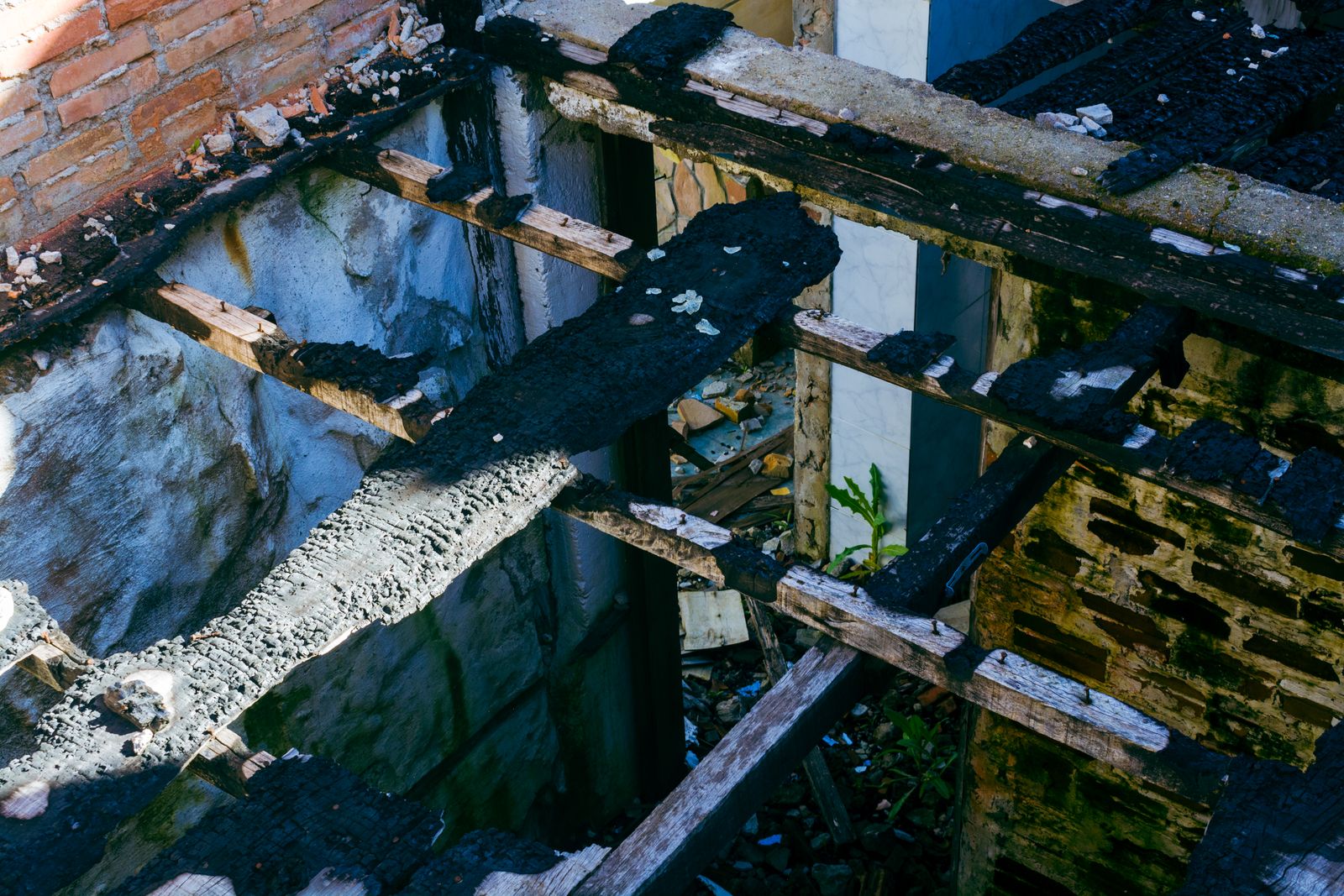
Charred Material Removal in Fairfax, Virginia
Charred debris removal after a fire requires safety assessment, proper containment, and careful documentation before anything is moved. We handle fire debris removal as part of a full restoration scope — not a standalone demo job.
Charred material removal seems straightforward but creates risks if not approached correctly. Unstable structural elements, residual chemical hazards from burning synthetic materials, asbestos-containing materials disturbed in the fire (common in Fairfax's pre-1980 housing stock), and the documentation requirements for insurance claims all require the removal to be planned and executed carefully.
Our first step on any fire debris removal project: structural safety assessment. Load-bearing elements compromised by fire — floor joists, rafters, load-bearing walls — need to be evaluated before crew members work in or under them. We bring in a structural engineer assessment for any fire that has visibly compromised structural members. No one goes in until that assessment is complete.
Contents and building materials are inventoried before removal begins. Insurance adjusters need a complete inventory of what was lost — and once it's in a dumpster, that documentation opportunity is gone. We photograph and list every room before debris is moved. Charred materials are sorted: what can be restored (some structural members, masonry, metal components) versus what must be disposed of. Asbestos-containing materials identified before the fire are flagged for testing before removal — fire does not eliminate asbestos hazard, and disturbing ACMs without testing creates compliance liability.
🔧 Technician Insight: The most common insurance complication on fire debris jobs: the homeowner or a contractor begins debris removal before documentation is complete. Adjusters cannot scope what they can't see, and items removed before the adjuster visits the site often get omitted from the claim. We don't begin debris removal until documentation is complete and the adjuster either has visited or has waived the site visit requirement in writing.
📋 Real Scenario: We were called to a Fairfax City home after a kitchen fire caused by an unattended stovetop event. The fire was contained to the kitchen but smoke damage extended throughout the first floor. Before any debris removal, we photographed the kitchen in its post-fire condition room-by-room and produced a contents inventory. The adjuster visited within 24 hours. After adjuster sign-off, we removed the charred cabinetry, appliances, and damaged drywall — separating salvageable metal components from debris for proper disposal. The inventory we produced resulted in full replacement coverage for every item documented. The kitchen was rebuilt in 3 weeks.
What Charred Material Removal Typically Costs in Fairfax
Typical range: $1,500 – $5,000 for a mid-scope service in the Fairfax County area. Final cost depends on the specific conditions of your property — we give you a written scope and estimate after the on-site walk-through, with no obligation to proceed.
What affects pricing on a charred material removal job:
- Square footage and number of rooms affected
- Type of materials affected (hardwood vs. carpet; drywall vs. plaster)
- Whether the cause has been corrected (an active leak extends the scope)
- Insurance involvement and documentation requirements
About insurance: Most events in this range qualify for insurance coverage when the cause is sudden and accidental. We work directly with your carrier and provide documentation that meets adjuster requirements.
Want a real number for your situation? Call (571) 708-6083 for a free on-site assessment.
Why Charred Material Removal Has to Start Within Hours, Not Days
Safety Assessment
Structural integrity, electrical, and air quality checks before entry.
Board Up & Tarp
Emergency weatherproofing prevents secondary water and pest damage.
Debris Removal
Charred materials removed, contents inventoried and triaged for restoration vs. disposal.
Soot & Smoke Cleaning
Every surface cleaned with the appropriate medium — wet, dry, or chemical sponge — based on soot type.
Deodorization
Thermal fogging, ozone, and hydroxyl treatments eliminate odors at the molecular level.
Reconstruction
Full rebuild with licensed tradespeople — we manage the whole project.
Companion Services Often Required
AC/Fire Restoration
Full fire restoration scope including structural cleanup, smoke remediation, and reconstruction.
Learn More →Smoke Odor Removal
Odor elimination after charred materials are removed.
Learn More →Demolition of Fire Damaged Areas
Controlled demolition of fire-damaged structural elements.
Learn More →Content Pack-Out Services
Inventory and salvage of contents before and during debris removal.
Learn More →Fairfax Property Owners on Their Charred Material Removal Experience
We earn our reputation one job at a time. Here's what some of our customers have said.
"Kitchen fire took out one wall and put soot through the whole first floor. They cleaned, sealed, and repainted everything — even the rooms upstairs where the smoke had migrated. The house actually smells better than before the fire."
Elena V.McLean, VA Verified Review"Puffback from the furnace dropped oily soot on every surface in the house. They knew exactly what it was, brought the right equipment, and had the whole place clean and odor-free in two weeks."
Gregory T.Annandale, VA Verified Review"After the kitchen fire we thought our cabinets were ruined. They cleaned the solid-wood doors and frames, replaced only the particleboard boxes that took heat, and matched the finish exactly."
Theodore W.Vienna, VA Verified ReviewCharred Material Removal — Questions We Get Most Often
Other Fire-and-Smoke Services Often Needed Together
AC Fire Restoration
Professional ac fire restoration in Fairfax and surrounding VA communities.
View Service →Commercial Fire Smoke Cleanup
Professional commercial fire smoke cleanup in Fairfax and surrounding VA communities.
View Service →Demolition of Fire Damaged Areas
Professional demolition of fire damaged areas in Fairfax and surrounding VA communities.
View Service →Dishwasher Overflow Cleanup
Professional dishwasher overflow cleanup in Fairfax and surrounding VA communities.
View Service →Emergency Board Up Post Fire
Professional emergency board up post fire in Fairfax and surrounding VA communities.
View Service →Emergency Fire Damage Assessment
Professional emergency fire damage assessment in Fairfax and surrounding VA communities.
View Service →Communities Across Our Fairfax County Service Range
Annandale · Burke · Centreville · Chantilly · Fair Oaks · Fairfax · View All Service Areas
Charred Material Removal Service Footprint Across Fairfax, VA
Charred Material Removal in Fairfax? Call Before the Next Hour Passes
Our Fairfax team is on-call 24/7. Call now for a free, no-obligation quote.
Call (571) 708-6083