10301 Lee Hwy, Fairfax, VA 22030 24/7 Emergencies  ·  Mon–Fri 8 AM–8 PM Scheduled
Industrial & Office Damage Restoration in Fairfax, Virginia
Licensed & Insured IICRC Certified 24/7 Emergency

Industrial & Office Damage Restoration in Fairfax, Virginia

Restoration with the crew scale and documentation discipline that industrial, office, and data-center properties require — built around your operations, your tenants, and your continuity-of-business plan.

Call Now — (571) 708-6083 Free Estimate · Rapid Response · No Obligation

Industrial and office restoration is restoration at scale. A leak in a 200,000 square-foot distribution center isn't a one-crew job. A water event in a corporate office means hundreds of workstations, dozens of conference rooms, IT closets and electrical rooms that have to be addressed before the rest of the building can come back online. A data-center incident is measured in minutes of downtime per cabinet, not days of dry-out. The discipline and the crew scale have to match the property.

We work the industrial and office cluster across the Fairfax / Dulles corridor — warehouses and distribution centers along Route 28 and the airport-adjacent industrial parks, factories and manufacturing facilities across the western county, corporate office campuses along the Reston / Herndon / Tysons axis, multi-tenant office buildings throughout the county, data-center and server-room incidents in the Northern Virginia data-center alley, and active-construction-site water events on commercial builds in progress.

Every job runs to the property's continuity-of-operations plan. For warehouses that means inventory protection, rack-system drying, and aisle-by-aisle release back to operations. For offices that means workstation-by-workstation triage, IT-equipment documentation for the carrier, and conference-room and common-area phasing so the workday absorbs the impact. For data centers it means containment that protects active cabinets, coordination with the customer's on-site engineering, and clearance documentation that goes into the customer's incident file.

What Industrial Office Damage Restoration Typically Costs in Fairfax

Typical range: $15,000 – $75,000+ for a whole-property scope in the Fairfax County area. Final cost depends on the specific conditions of your property — we give you a written scope and estimate after the on-site walk-through, with no obligation to proceed.

What affects pricing on a industrial office damage restoration job:

  • Total building square footage and number of zones affected
  • Operational continuity requirements (occupied vs. unoccupied during work)
  • Business-interruption documentation depth for commercial insurance
  • Coordination with multiple specialty trades (engineers, environmental, MEP)
  • Local regulatory requirements (historic, ADA, jurisdiction-specific)

About insurance: Whole-property and commercial scopes involve detailed business-interruption and operational-continuity documentation. We provide the full restoration record and partner with your carrier's commercial team throughout.

Want a real number for your situation? Call (571) 708-6083 for a free on-site assessment.

How We Run Industrial & Office Damage Restoration

1

Continuity-First Assessment

What's mission-critical, what's mission-adjacent, what can wait. Restoration sequence is built to keep critical operations running first; everything else is staged around that constraint.

2

Crew Scaling

Industrial and large-office losses require crew sizes that match the scope. We scale up the first 24 hours so the initial extraction and containment are done at speed, then optimize the crew profile for the dry-out and reconstruction phases.

3

Inventory & Asset Protection

For warehouse and inventory-heavy facilities: damaged stock photo-documented in place, sellable stock relocated, salvage-vs-loss documented per pallet. For office: workstation contents, electronics, files documented before any move.

4

IT & Electrical Coordination

Server rooms, IT closets, and electrical rooms addressed with separate protocols. Equipment de-energized only with the facility's engineering signoff. Sensitive equipment evaluated by an electronics-restoration specialist before disposal decisions.

5

Zone-by-Zone Containment

Large facilities run multiple containment zones in parallel. Aisles, wings, floors, or building sections containerized and dried independently so partial release back to operations happens as each zone clears.

6

Phased Release to Operations

No "all or nothing" reopening. Each zone returns to operations the moment it passes clearance. The facility runs at progressively higher capacity through the restoration timeline, not at zero until the very end.

7

Continuity & Insurance Documentation

Final package includes operations-impact log (which zones were down, when, what business activity was affected), full restoration scope and photo log, IT-equipment evaluation log, and the materials-and-methods record the carrier and the facility's risk team both need.

Properties We Restore Within This Category

Warehouses

High-bay storage facilities across Route 28, Sterling, Chantilly. Rack-system drying without rack disassembly where possible, inventory pack-out logistics, aisle-by-aisle release back to operations. We work around the inbound/outbound dock schedule.

Factories & Manufacturing Facilities

Production-line impact assessment first. Critical equipment dried in place with crew dedicated to that asset; non-critical zones containerized for standard restoration. Production-floor documentation matches what the facility's ops team needs for downtime reporting.

Manufacturing Facility Sanitization

For sanitization and decontamination scopes — post-event surface decontamination, contamination-control protocols, ATP verification on critical surfaces, documentation aligned with the facility's quality-management system.

Industrial Equipment Restoration

Machinery dry-out and decontamination — control panels, motor housings, hydraulic and pneumatic systems. Coordination with the equipment OEM where warranty implications exist. Salvage-vs-replace documentation for the carrier.

Distribution Centers

Large-format distribution properties along the Dulles corridor and Route 28. Dock-door staging, inventory triage at scale, multi-shift work schedule overlay. Critical lanes prioritized so outbound shipping continues during restoration.

Data Centers & Server Rooms

Active-cabinet protection, raised-floor moisture mapping, separate containment around energized equipment, and coordination with the operator's on-site engineering and the customer's incident-response team. Documentation goes into the customer incident file.

Office Buildings (Multi-Tenant)

Multi-tenant office properties across the county. Tenant-by-tenant notification, common-area phasing, elevator and lobby preservation, and per-tenant scope documentation for landlord-side insurance and tenant-side BI claims.

Corporate Office Campuses

Single-tenant or anchor-tenant corporate campuses across Reston, Herndon, Tysons. Workstation-by-workstation triage, conference-room and shared-space phasing, IT-equipment documentation, executive-area protection during the active-work window.

Construction Sites (Active Builds)

Water events on active commercial construction. Coordination with the GC, the affected trades, and the project's insurance carrier. Documentation aligned with the project's change-order and rework process so the schedule impact is minimized.
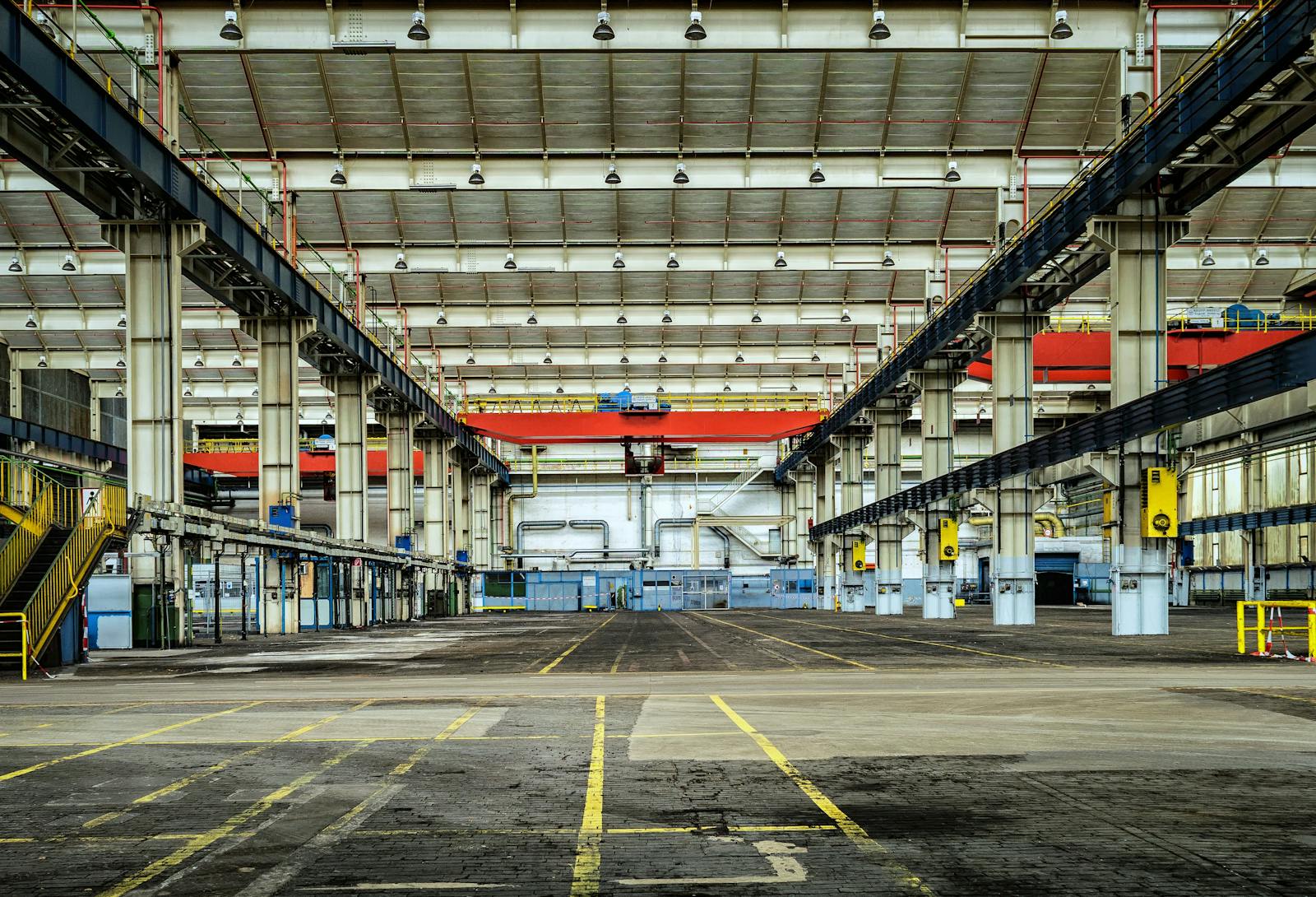
Why Industrial & Office Restoration Runs Differently

The shared thread across the industrial and office cluster is scale and continuity. A 30,000 square-foot office floor with 200 workstations isn't a residential loss times 50 — it's a different problem. The decisions are different (per-workstation salvage triage), the documentation is different (operations-impact log for the BI claim), and the crew profile is different (more people in the first 24 hours, then a longer tail of detailed work).

We staff every industrial and office job with a project manager who runs the customer-facing operational coordination separately from the technical restoration lead. The PM owns the continuity-of-operations plan, the per-zone release schedule, and the documentation package. The tech lead owns moisture readings, containment integrity, and crew scheduling. Both report to ownership or the building's facility manager on a daily cadence.

Real Reviews from Real Fairfax Properties

“Sprinkler failure took out 40,000 square feet of warehouse overnight. They had three crews on-site within four hours, contained the affected aisles, kept the rest of the dock operational, and we were releasing aisles back into the pick process within 48 hours. Full back to operations in nine days.”

Patrick D. — Operations Director, distribution facility along Route 28

“Pipe burst on the third floor over a long weekend. They had it contained Saturday morning, ran the dry-out through the weekend, and we had 80% of the floor back in service Tuesday morning. Per-workstation documentation made the tenant claims clean.”

Lisa K. — Facilities Manager, corporate campus in Reston

“Roof leak above a customer cage. They were on-site within an hour, built containment around the energized cabinets, coordinated with our engineering team on the de-energization sequence for the affected racks, and the customer never saw an outage on critical infrastructure. Documentation went into the incident file the same week.”

Hari M. — Data center operations, NoVA corridor

Industrial & Office Damage Restoration — Questions We Hear Most

Can you handle a loss that affects mission-critical operations?

Yes — that's most of our industrial and office work. Critical operations stay running through dedicated containment and crew, while standard restoration runs the rest of the property in parallel. Continuity-of-operations plan drives the work sequence.

How do you handle a water event in a data center or server room?

Active-cabinet protection first, separate containment around energized equipment, coordination with the facility's on-site engineering before any de-energization, and clearance documentation that goes into the operator and customer incident files. We have data-center-trained crew available for these calls.

What's your capacity on a large-loss industrial job?

We scale crews to match the loss. For a typical 50,000-200,000 square-foot industrial loss we mobilize a multi-crew response within hours; we can scale further for larger losses through our network of partner crews under one project manager.

How do you handle inventory in a warehouse?

Damaged stock photo-documented in place, salvageable stock relocated to dry zones in the same building where possible, salvage-vs-loss documentation per pallet for the carrier. Inbound/outbound dock operations preserved through aisle-by-aisle release back to operations.

Can you coordinate with multiple tenants in an office building?

Yes — tenant-by-tenant notification from hour one, per-tenant scope documentation for both landlord-side and tenant-side insurance, and common-area phasing that lets tenants keep using elevators, lobbies, and shared restrooms. We do not surprise tenants.

What about electronics and IT equipment that got wet?

Documented in place, evaluated by an electronics-restoration specialist before any disposal decision. Many items can be cleaned and restored; some have to be replaced; the salvage-vs-replace documentation goes to the carrier with photo and serial-number records.

Do you have the documentation needed for a complex business-interruption claim?

Yes. Operations-impact log tracks affected square footage hour-by-hour, which business activity was affected, which zones were down, and when each came back online. Your BI adjuster runs the dollar calculation; we provide the underlying operational data.

Industrial or Office Loss in Fairfax? Call Before the Next Shift Starts.

Large losses need crew at scale within the first hours. The earlier the call, the more we can save.

Call Now — (571) 708-6083